
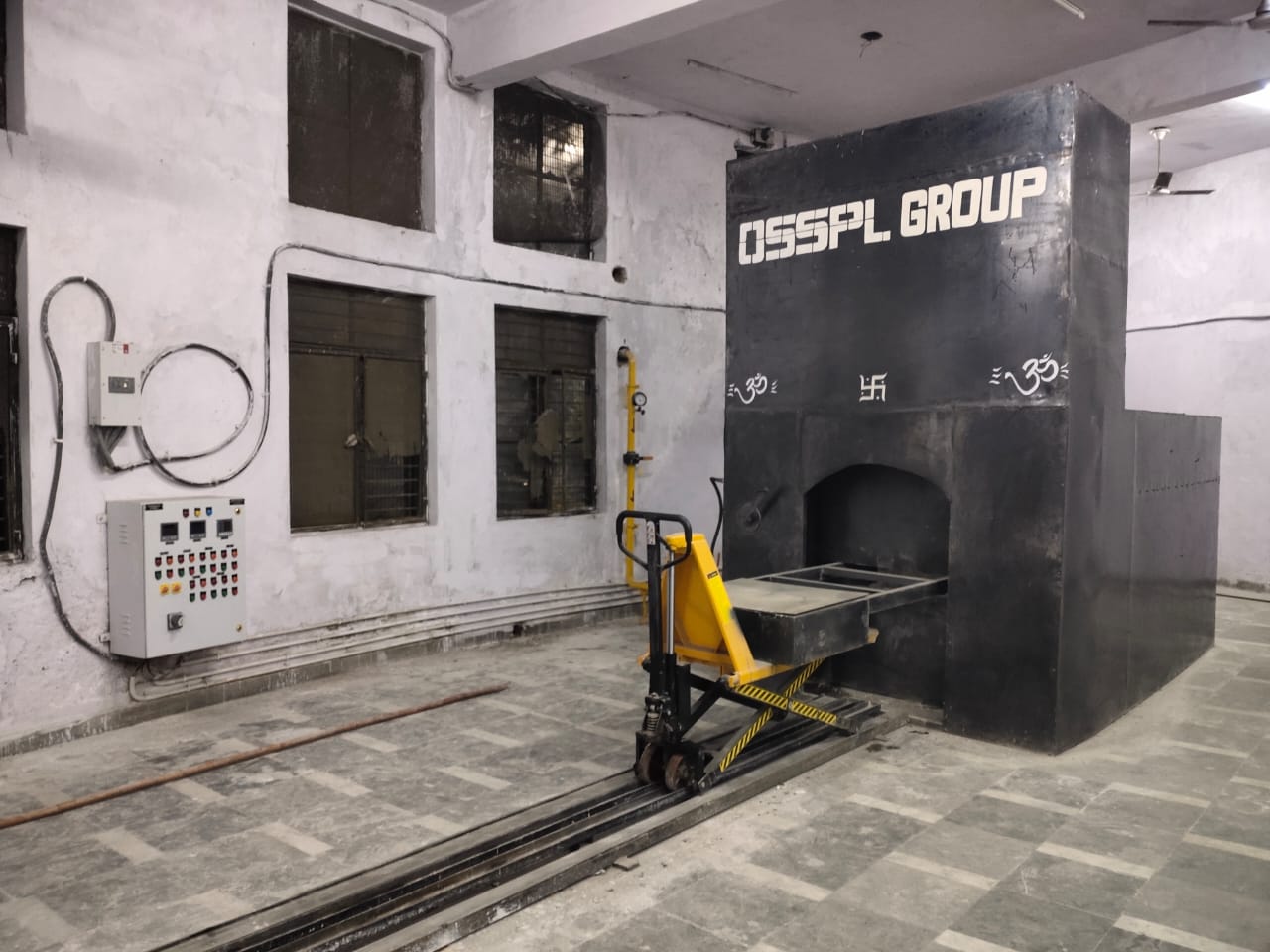
he cremation occurs in a cremator, which is located at a crematorium or crematory. In many countries, the crematorium is a venue for funerals as well as cremation. A cremator is an industrial furnace that is able to generate temperatures of 871–982 °C (1, 600–1, 800 °F) to ensure the disintegration of the corpse.[40] Modern cremator fuels electric include oil, natural gas, propane, and, in Hong Kong, coal gas. Modern cremators automatically monitor their interior to tell when the cremation process is complete and have a spyhole so that an operator can see inside. The time required for cremation varies from body to body, with the average being45- 90 minutes for an adult body. The chamber where the body is placed is called a cremation chamber or retort and is lined with heat-resistant refractory bricks. Refractory bricks are designed in several layers. The outermost layer is usually simply an insulation material, e.g., mineral wool. Inside is typically a layer of insulation brick, mostly calcium silicate in nature. Heavy duty cremators are usually designed with two layers of fire bricks inside the insulation layer. The layer of fire bricks in contact with the combustion process protects the outer layer and must be replaced from time to time. The body is generally required to be inside a coffin or a combustible container. This allows the body to be quickly and safely slid into the cremator. It also reduces health risks to the operators. The coffin or container is inserted (charged) into the cremator as quickly as possible to avoid heat loss. Some crematoria allow relatives to view the charging. This is sometimes done for religious reasons, such as in traditional Hindu and Jain funerals, and is also customary in Japan.


This is your website preview.
Currently it only shows your basic business info. Start adding relevant business details such as description, images and products or services to gain your customers attention by using Boost 360 android app / iOS App / web portal.
he cremation occurs in a cremator, which is locate...
2023-08-10T11:16:36
he cremation occurs in a cremator, which is located at a crematorium or crematory. In many countries, the crematorium is a venue for funerals as well as cremation. A cremator is an industrial furnace that is able to generate temperatures of 871–982 °C (1, 600–1, 800 °F) to ensure the disintegration of the corpse.[40] Modern cremator fuels electric include oil, natural gas, propane, and, in Hong Kong, coal gas. Modern cremators automatically monitor their interior to tell when the cremation process is complete and have a spyhole so that an operator can see inside. The time required for cremation varies from body to body, with the average being45- 90 minutes for an adult body. The chamber where the body is placed is called a cremation chamber or retort and is lined with heat-resistant refractory bricks. Refractory bricks are designed in several layers. The outermost layer is usually simply an insulation material, e.g., mineral wool. Inside is typically a layer of insulation brick, mostly calcium silicate in nature. Heavy duty cremators are usually designed with two layers of fire bricks inside the insulation layer. The layer of fire bricks in contact with the combustion process protects the outer layer and must be replaced from time to time. The body is generally required to be inside a coffin or a combustible container. This allows the body to be quickly and safely slid into the cremator. It also reduces health risks to the operators. The coffin or container is inserted (charged) into the cremator as quickly as possible to avoid heat loss. Some crematoria allow relatives to view the charging. This is sometimes done for religious reasons, such as in traditional Hindu and Jain funerals, and is also customary in Japan.
2023-08-10T11:16:36


Keywords
- oil
- time
- Japan
- venue
- 800 °F
- coffin
- nature
- corpse
- contact
- propane
- chamber
- average
- spyhole
- charging
- interior
- operator
- coal gas
- heat loss
- Hong Kong
- crematory
- relatives
- two layers
- crematoria
- adult body
- 871–982 °C
- outer layer
- natural gas
- fire bricks
- crematorium
- health risks
- mineral wool
- temperatures
- Jain funerals
- disintegration
- several layers
- many countries
- outermost layer
- Modern cremators
- insulation layer
- insulation brick
- traditional Hindu
- religious reasons
- cremation process
- combustion process
- industrial furnace
- insulation material
- Heavy duty cremators
- combustible container
- Modern cremator fuels electric
- heat-resistant refractory bricks
Submit Your Enquiry